Technical Description
The C 60 design creates a grid of approximately 150 hexagonal panes of smart glass. Behind each of these panes is a static "billboard" of translucent plastic with either an image or a solid color printed on it. These billboard pieces can be backlit by standard light bulbs for nighttime viewing.
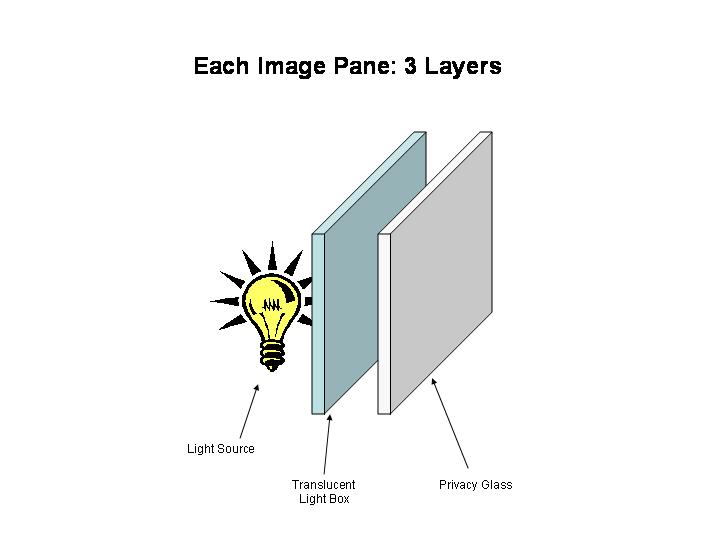
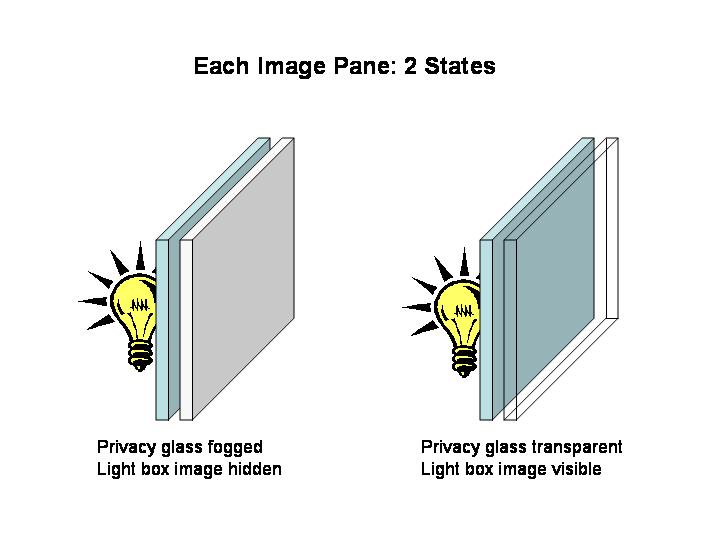
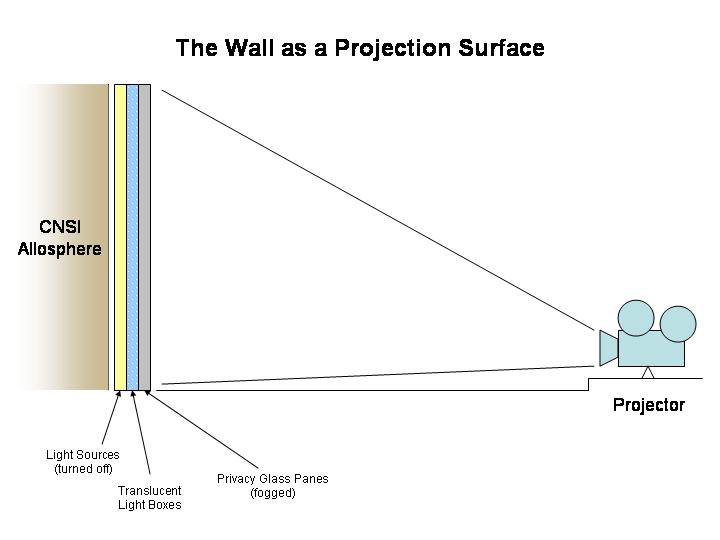
Smart glass is architectural glass that changes from transparent to translucent with the flip of switch. The glass contains suspended particles which normally scatter randomly through the glass, diffusing the light and creating a fogged effect. When a voltage is applied, the particles align and light can pass through. When translucent, the glass can also be used as a projection screen.
The objects chosen for the billboard all reflect on UCSB and/or nanotechnology. The objects represented get progressively smaller as the viewer looks from left-to-right, creating a "drive-by" experience for the typical viewer. Similarly, the wavelengths of the solid colored billboards get progressively shorter; the ever smaller light waves mirror the ever smaller objects. The narrative flow of these images mirrors the revelatory quality of the smart glass, as drivers coming onto campus get a closer and closer look at what is being studied at CNSI. Drivers heading the other direction, appropriately, see the opposite narrative: a continuous zooming out as they leave campus. The solid colored billboards serve to connect this narrative to the rest of the CNSI facade and its colored stripes.
Additionally, the C 60 design could easily incorporate some simple interactive elements. The ways in which the smart glass switches states—the speed with which the windows change, the percentage of the windows that are frosted, and which regions of the design are frosted—could all be controlled by environmental variables or by direct human interaction. Data derived from activity within CNSI, the rate at which traffic is passing the wall, CNSI's electricity consumption, the specific labs within CNSI that are in use, or the date, time, weather, or temperature could control the state of the design.